Enterprise UX at the limit: Why small patterns determine whether software and AI can scale
Large SaaS products rarely fail because of missing features. More often, their complexity outgrows the interface. As teams and capabilities expand, small inconsistencies erode coherence and increase cognitive load. Felix, Lead Designer at Futurice, explains why scalable enterprise UX depends less on individual components than on the patterns that connect them – and why these patterns matter for accessibility, automation and AI-ready software.

Why do powerful SaaS products eventually become fragmented?
Fragmentation is the result of years of local optimization: different teams solving specific problems independently. While each decision seems harmless, they collectively create an experience that lacks structural consistency.
Modern software ecosystems are built to grow. The underlying technology is often designed to handle more users, more data and more features without breaking. In many organizations, the engineering practices for scaling systems are more mature than the practices for scaling interfaces. Interfaces follow a different trajectory.
“Many enterprise systems eventually become incredibly capable,” Felix says. “But their interfaces gradually lose the clarity they once had.”
The reason is rarely a single design decision. Instead, fragmentation emerges when different teams own different features and naturally optimize for their specific use case. Over time, these subtle divergences accumulate – until the interface stops behaving like a coherent system.
Where does fragmentation actually start?
It rarely begins with large features. It starts in the invisible recurring structures: navigation, filters, data-heavy views. These deceptively simple elements form the foundation of daily interaction – and that is precisely why small inconsistencies matter.
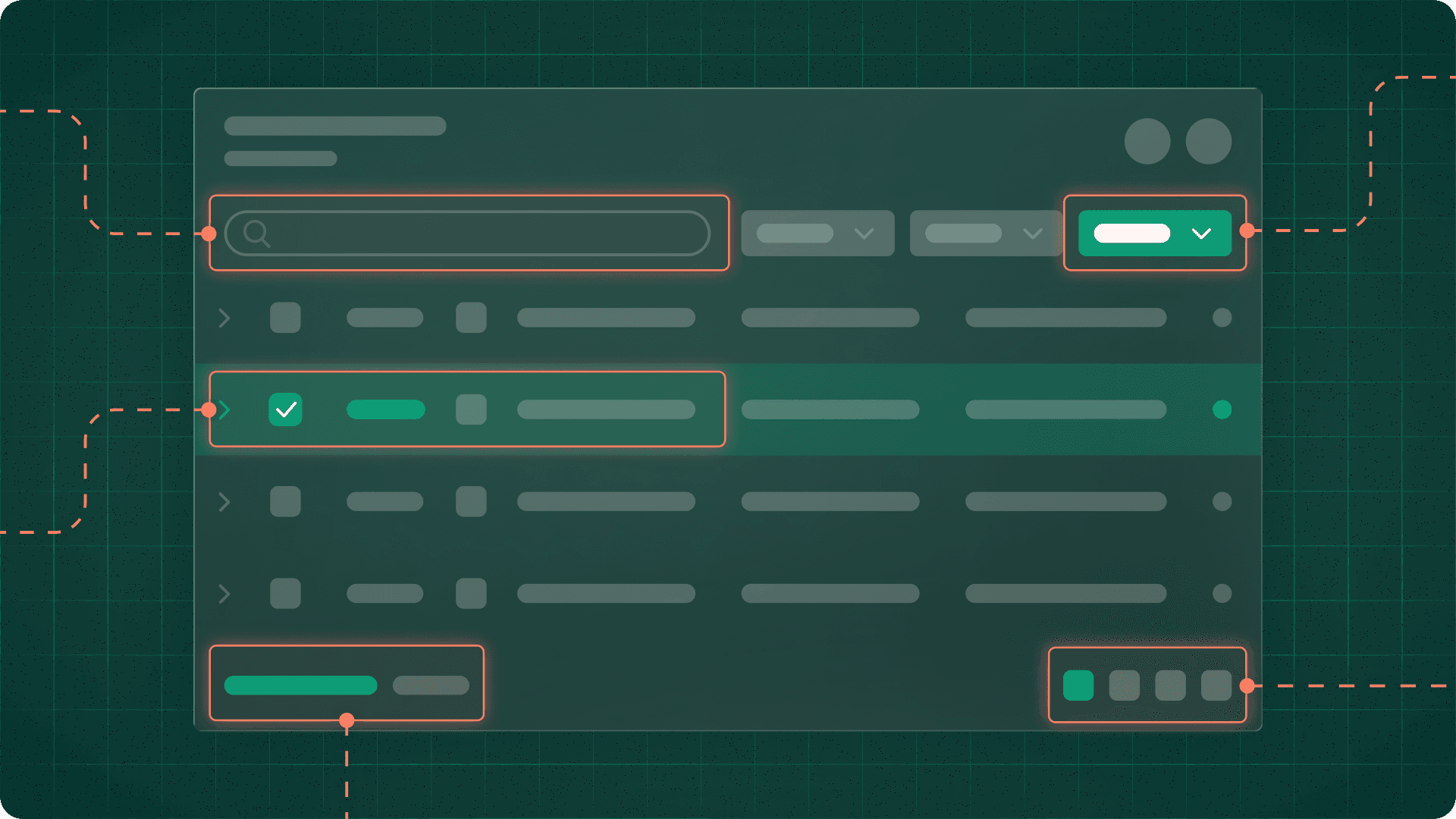
Consider a list view – arguably one of the most ubiquitous patterns in enterprise software. It needs to support sorting, selection, inline editing, keyboard navigation and real-time data updates, all at once. In a product with dozens of modules, it is not unusual to find multiple local implementations of the same pattern. Each may come with its own sorting logic, its own selection model and its own keyboard behavior.
Individually, each solution works. Collectively, they create an environment where users cannot build reliable expectations. In complex software systems, interaction patterns are not just design choices – they become part of the foundation the product is built on.
How do we shift from static components to system orchestration?
Patterns are not new to design systems. What is changing is what they need to carry. In mature SaaS products, patterns can no longer be treated only as visual guidelines or reusable layouts. They need to define behavior, accessibility semantics, implementation constraints and the rules that make an interface predictable across contexts.
The next step is not to replace component libraries, but to make the logic around them explicit: how patterns behave, how they respond to user intent and how consistently they can be implemented across the product. Felix calls this shift moving from maintaining a component library to orchestrating how the interface behaves as a whole.
The challenge is no longer only to style isolated elements consistently. It is to define how recurring interactions behave across contexts. A list must handle multiselect, filtering and real-time updates in a predictable way whether it appears in a dashboard, a settings panel or a data pipeline view. We stop focusing only on visuals and start asking: how does the system maintain a clear flow of information across the product?
Why is standardized behavior the key to Agentic AI – and Accessibility?
What makes interaction patterns difficult is rarely their visual design. The real complexity lies in behavior. And this behavioral predictability is becoming a prerequisite for the next generation of software.
As we move toward agentic interfaces, AI agents will need to navigate our tools alongside human users. Even when agents can interpret a screen visually, reliable automation depends on the semantic logic underneath: roles, states, labels and predictable interaction sequences. Standardized patterns provide that map. Without them, even advanced agents will struggle with the ambiguity of a fragmented interface.
Picture a concrete scenario: an AI agent needs to approve a batch of purchase orders inside an enterprise tool. It identifies the list, selects the relevant rows and triggers the approval action. Now imagine the same agent in a different module of the same product – where selection works through checkboxes instead of row clicks, where the bulk action menu is structured differently, where the confirmation dialog has different ARIA labels. The agent does not “figure it out” the way a human might. It fails. Silently.
The implication for teams building AI integrations today is hard to ignore: interface consistency is no longer just a UX concern. It is becoming a precondition for reliable automation.
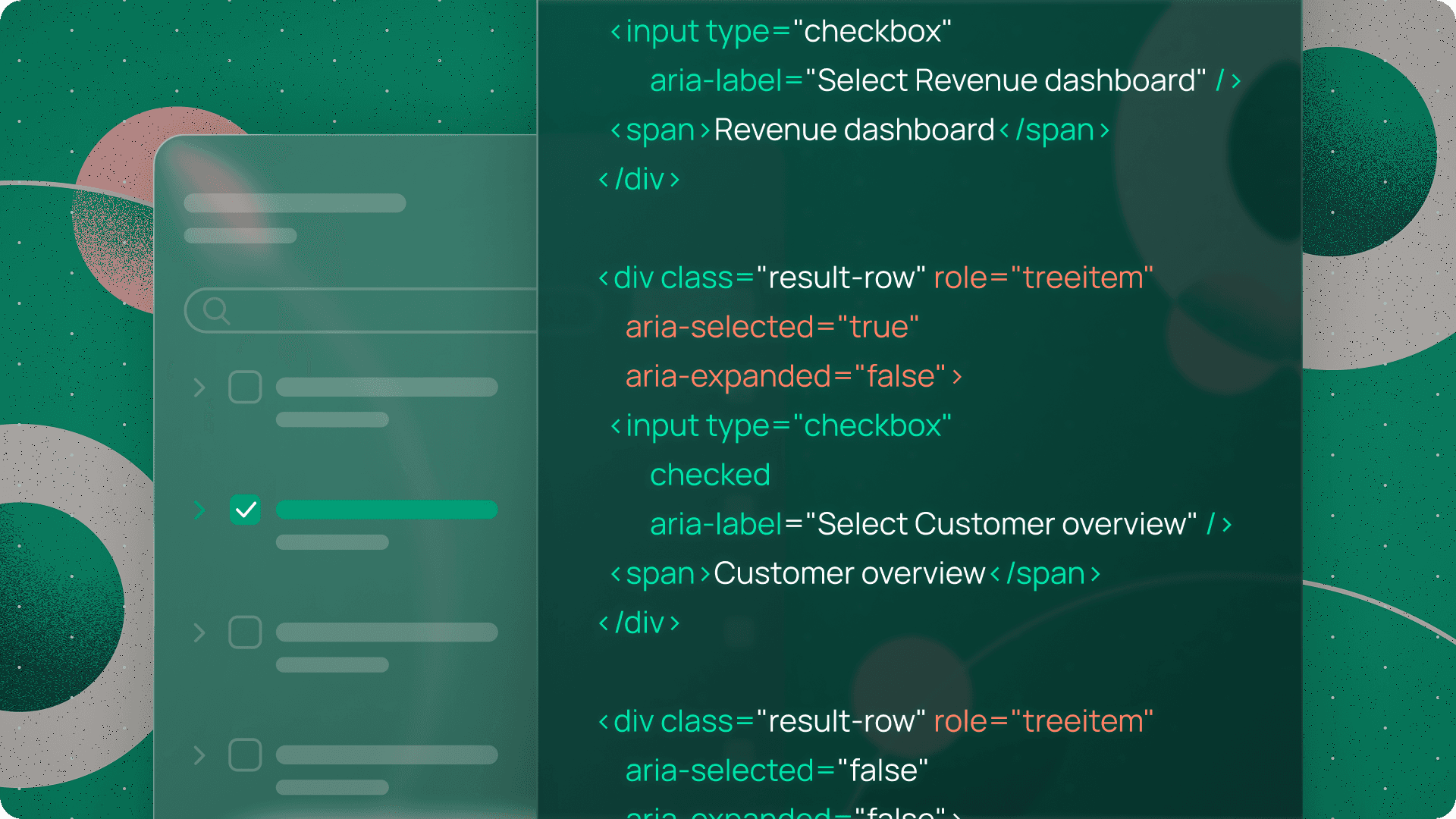
Since the European Accessibility Act came into effect in June 2025, accessibility is no longer a future requirement for many digital products and services in the EU – it is a legal reality. But there is a deeper insight: accessibility forces interfaces to become precise. ARIA-compliant, semantically structured components are far more legible to assistive technologies – and increasingly to the automation and AI layers built on top of them.
If a list pattern is natively accessible, every feature built from it starts from a stronger baseline: consistent semantics, predictable behavior and fewer opportunities for teams to reintroduce accessibility gaps. Compliance and AI-readiness increasingly depend on the same mechanism: pattern integrity.
What is the true cost of fragmentation?
Fragmentation burns engineering capacity, blocks innovation and compounds silently. Building shared logic in a mature SaaS environment means designing against years of legacy code and ingrained team habits.
“Scaling a system is always an exercise in trade-offs,” Felix notes.
A common tension is information density versus visual clarity. Enterprise power users often need to see hundreds of data points at once. Forcing a “clean” look can break a professional’s workflow. The goal is not the prettiest solution. It is the most functional one. Patterns gain adoption when designers, engineers and product teams trust that they solve real workflow problems – not just visual consistency problems.
But even well-designed patterns fail if teams do not adopt them.
“I have seen this happen often,” Felix says. “A well-documented pattern exists, but a team under deadline pressure builds a quick custom solution. Six months later, three other teams have copied that shortcut instead of the pattern. The system did not fail because it was poorly designed. It failed because adoption was not treated as part of the infrastructure.”
This is ultimately an organizational challenge as much as a design one. Patterns need advocates, not just documentation. That means shared decision-making between design and engineering, clear ownership and – critically – making the right solution the path of least resistance. When adopting a pattern is harder than building a custom one, teams will choose speed.
Why documentation alone is no longer enough – and AI creates new requirements
The gap between design intent and engineering implementation has historically been bridged by documentation written for humans. AI changes that equation, but not by eliminating documentation. It demands a second layer: machine-readable specifications that carry rules, constraints and dos and don’ts at the atomic level, so agents and coding tools can apply them more reliably instead of relying only on human interpretation.
A design system that can be read and acted on by AI is also one that helps close the gap between design and engineering. The rules stop living only in someone’s head or in static documentation, and start living in the system itself.
The path forward is not a redesign. It is a reframing. Teams that treat interaction patterns as infrastructure rather than deliverables, and design systems as machine-readable contracts rather than component libraries alone, are building the foundation that everything else depends on. Not just for the users working in these tools today, but for the AI agents that will work alongside them tomorrow. The question is no longer whether to invest in structural consistency. It is whether you can afford not to.
The scalability of a product is defined by the stability of its patterns – not the number of its features.
 Felix HohlLead Designer, Germany